

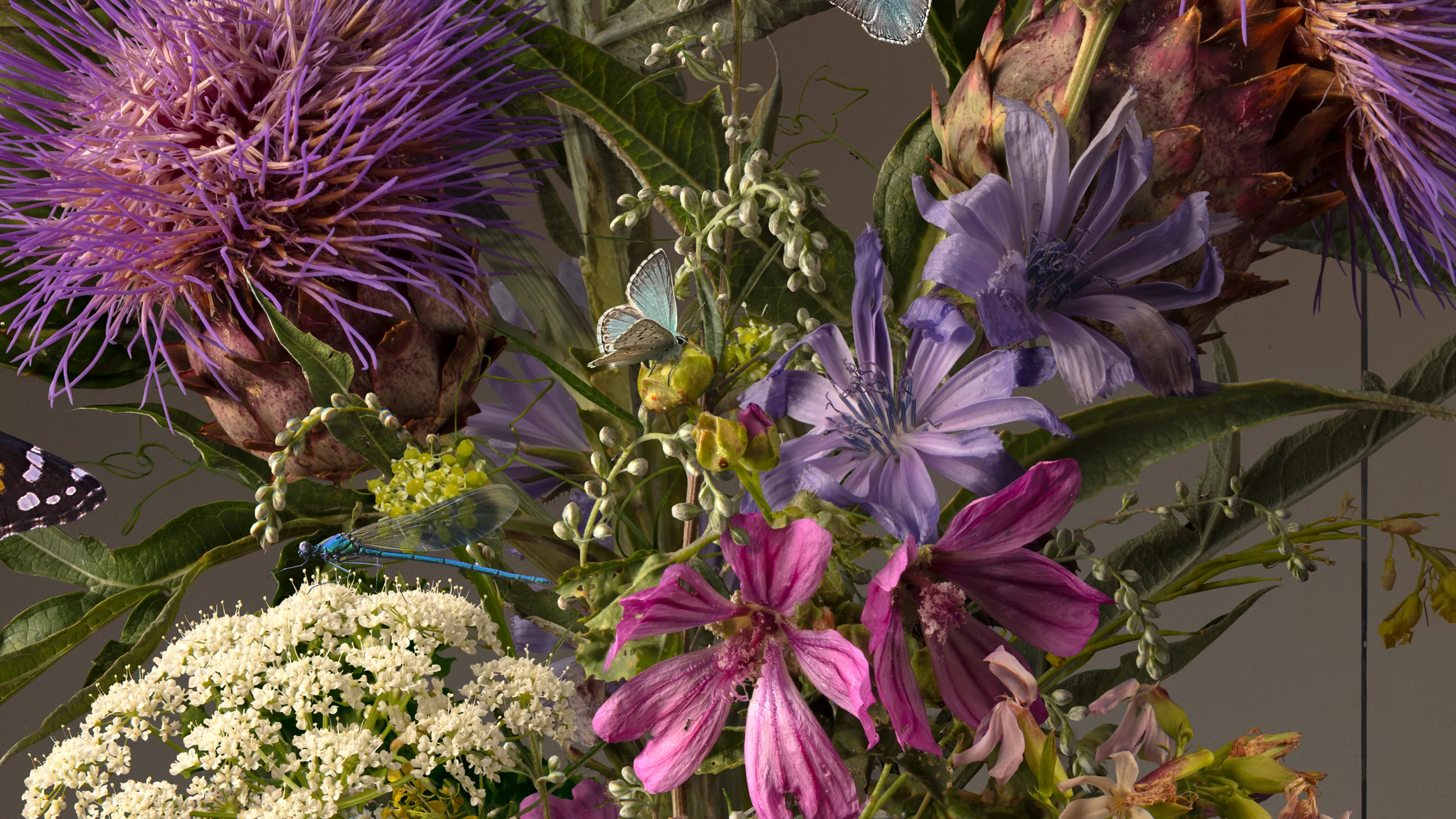
Flores Romani III, 2026 (detail)
Bas Meeuws
Photographic flower still lifes in the tradition of the Dutch Golden Age: impossible bouquets composed flower by flower from thousands of photographed blooms.
All works
Bas Meeuws fell for the flower painters of the Dutch Golden Age, for Ambrosius Bosschaert, Balthasar van der Ast and Jan Davidsz. de Heem, and for the wonder their bouquets were meant to stir in the people who stood before them. He set out to stir it again, with a camera instead of a brush. Season after season, at home and on his travels, he photographs every flower, every insect and every vase on its own, and files it away in an archive that now holds more than 17,000 blooms. Only later, at his desk, does the bouquet come together: spring tulips beside autumn dahlias, all in full bloom at once, an arrangement no vase has ever held. And somewhere in it, as the old masters would have wanted, a petal has fallen, a beetle is crawling, a snail is on its way. With Flores Romani, his newest series, the bouquets leave the Golden Age behind: wild flowers that came north with the Romans, gathered in Roman vessels from Museum Kam in Nijmegen and set before the walls of Roman houses in Xanten.
On view at PAN Amsterdam 2026, stand 85, 31 Oct – 8 Nov 2026
Flores Romani
2026
Long before they became part of the familiar Dutch landscape, these flowers travelled north with the Romans. Some were carried here by Roman hands, others spread in the wake of Roman influence, and today they flower almost unnoticed in ditches, fields and along the roadsides of the Netherlands, each carrying a quiet memory of movement, exchange and empire. In Flores Romani, Meeuws brings these seemingly ordinary plants back into a Roman world. Arranged as delicate still lifes, they stand in Roman vessels and pots photographed at Museum Kam in Nijmegen, some brought north from Italy, others made in the northern provinces of the empire, and the walls behind them are those of a Roman inn, a private house and a bathhouse, photographed in Xanten. Together, flowers, vessels and walls form a dialogue between the living and the archaeological, between what has endured and what has disappeared: an encounter across two thousand years, in which familiar flowers become witnesses to a distant past and ancient vessels hold a landscape that is still flowering today.
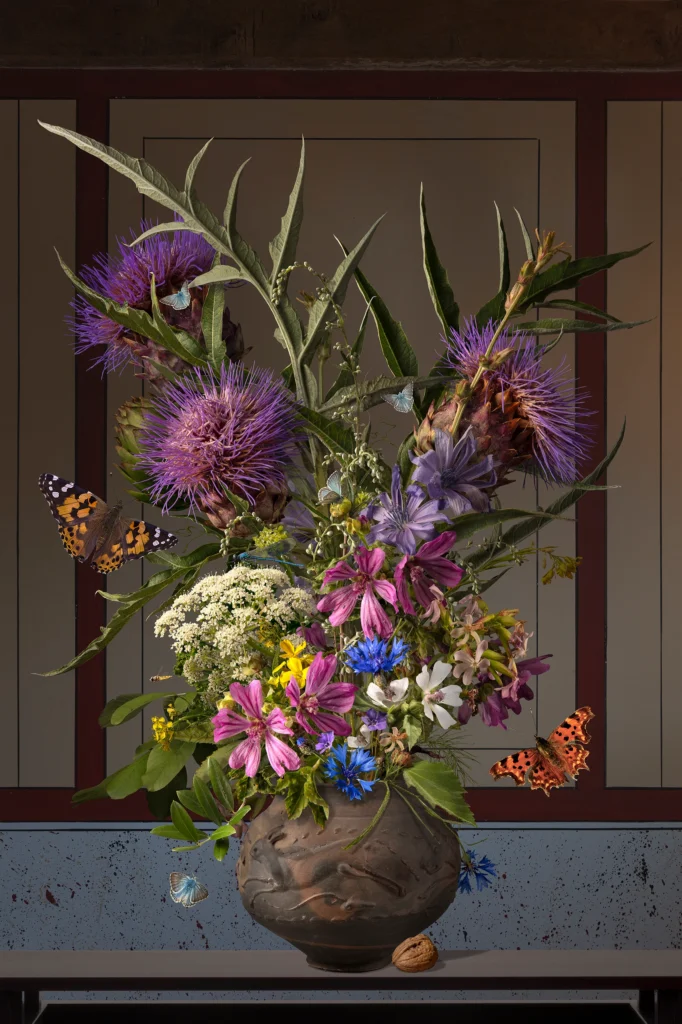
On view
Flores Romani III, 2026
Hommage to Jan Brueghel the Elder
2024 – 2025
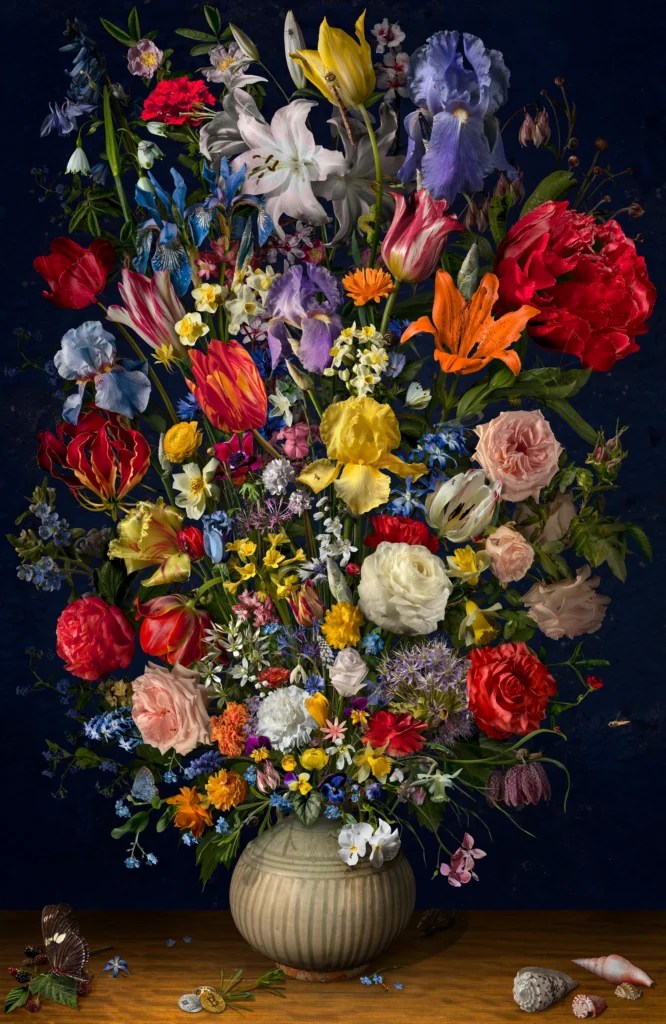
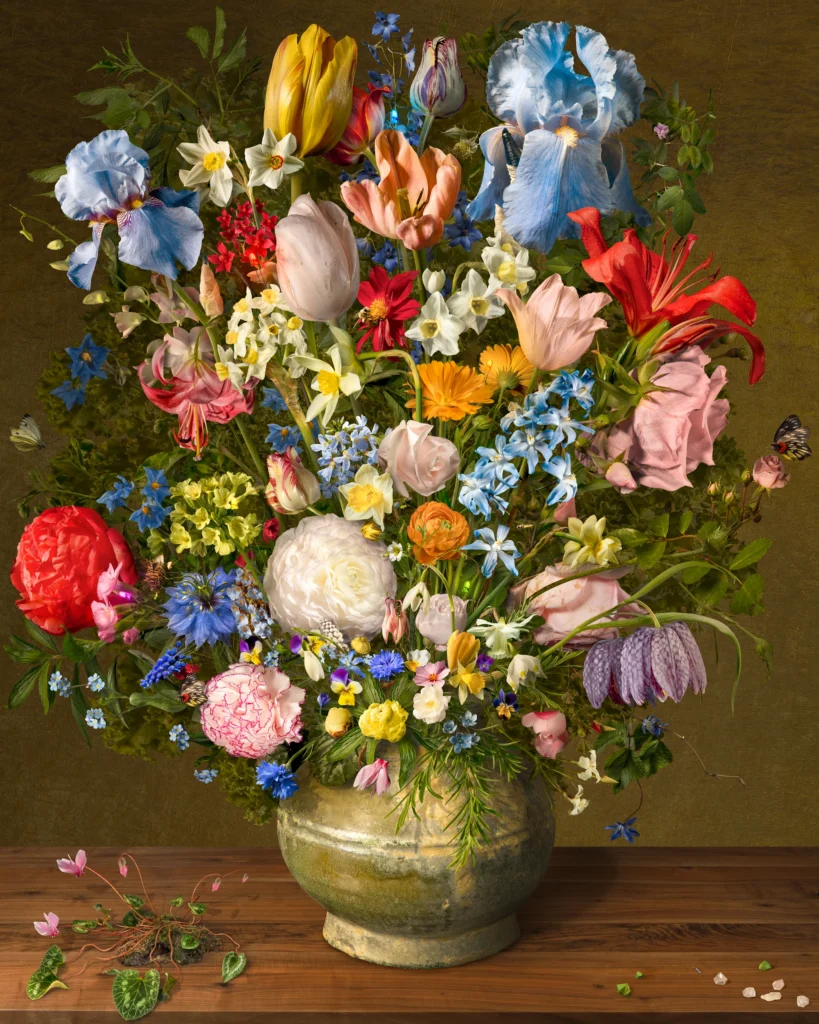
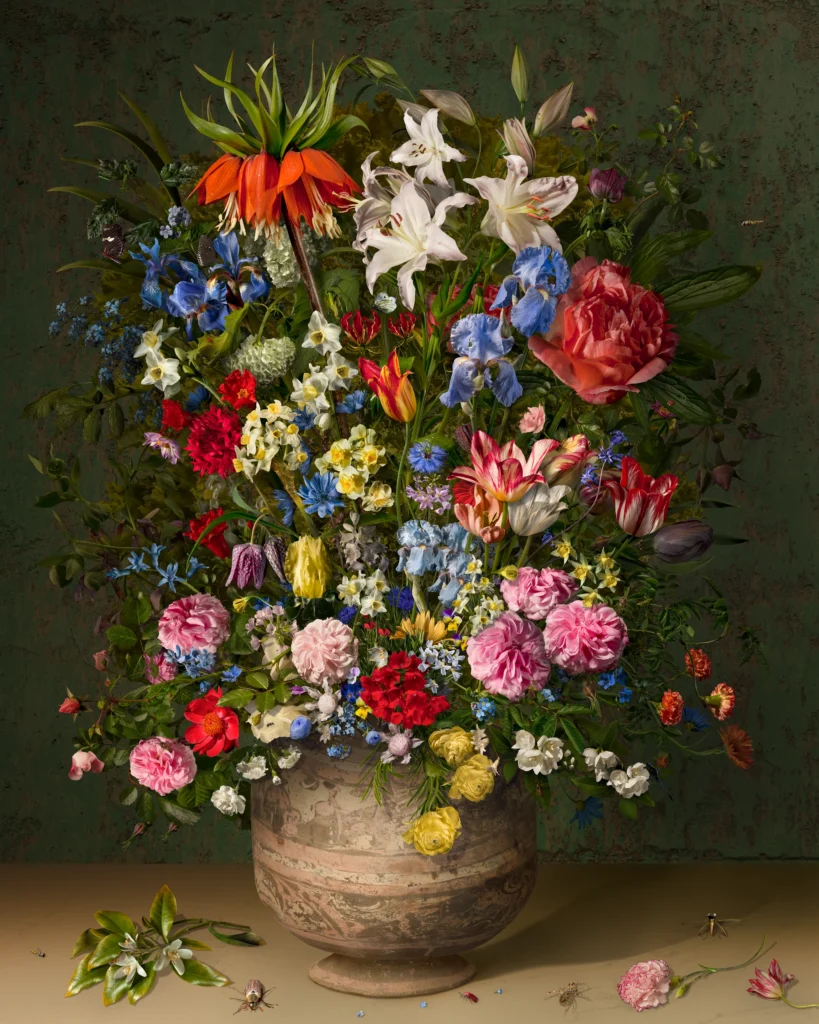
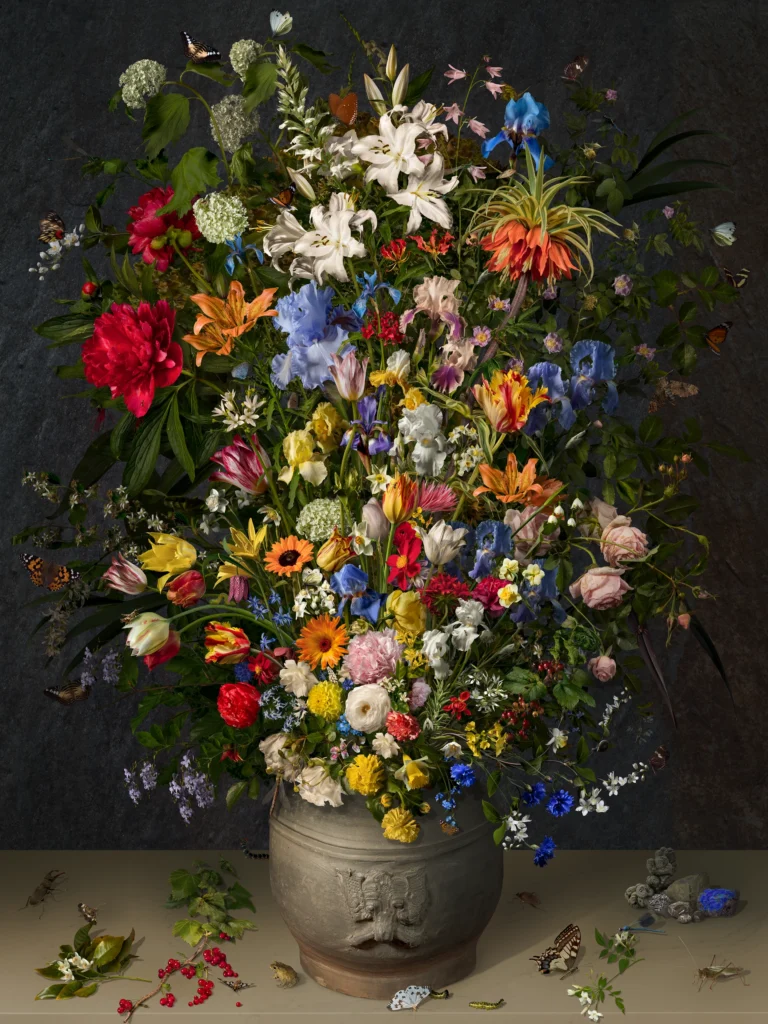
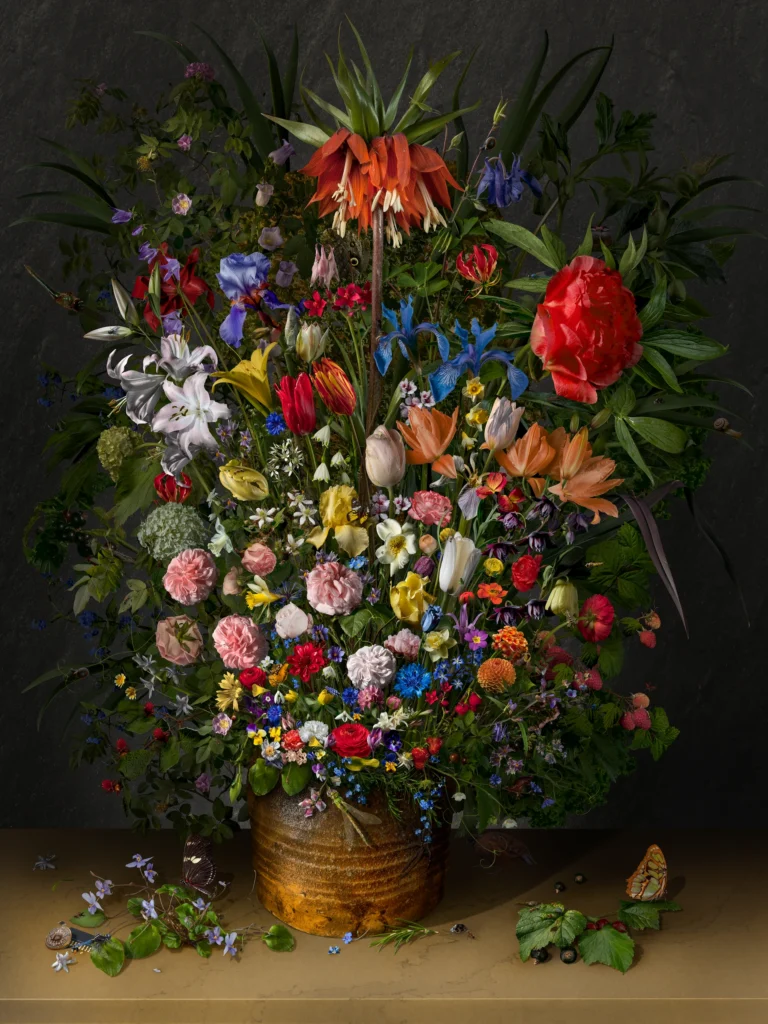
Jan Brueghel the Elder (1568 – 1625) painted the first great flower pieces of the Low Countries: dense, upright bouquets in earthenware pots and wooden tubs that gather dozens of species which could never bloom together into one impossible spring, a crown imperial at the top and fallen petals, coins or insects on the ledge below. In this series Meeuws pays tribute to those paintings with bouquets composed the same way, photographed flower by flower over a whole year and piled tight and high in a stoneware pot, the petals and beetles at its foot recorded with the same attention as the blooms. For Meeuws the series also returns to the very first sources of inspiration from the start of his career, now with the knowledge, skill, materials and techniques of today.
Gold
2024 – 2025
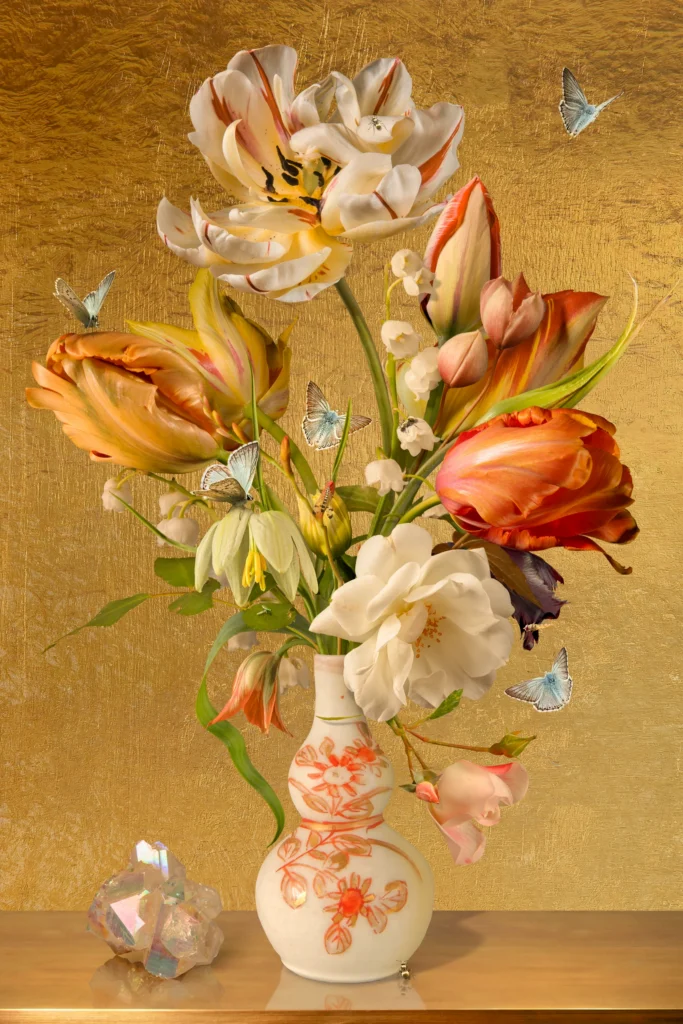
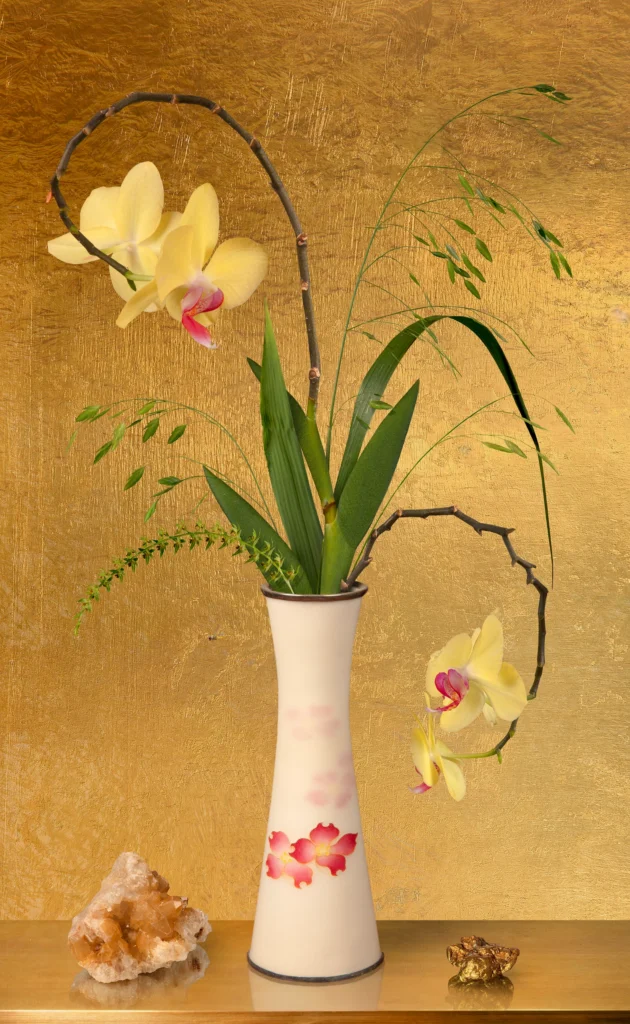
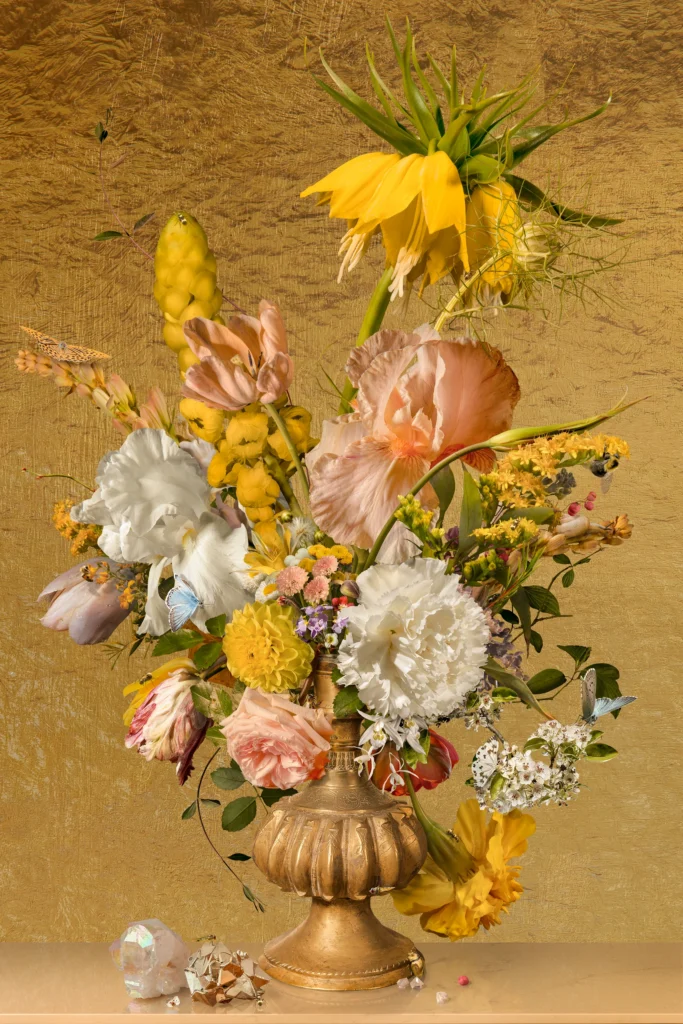
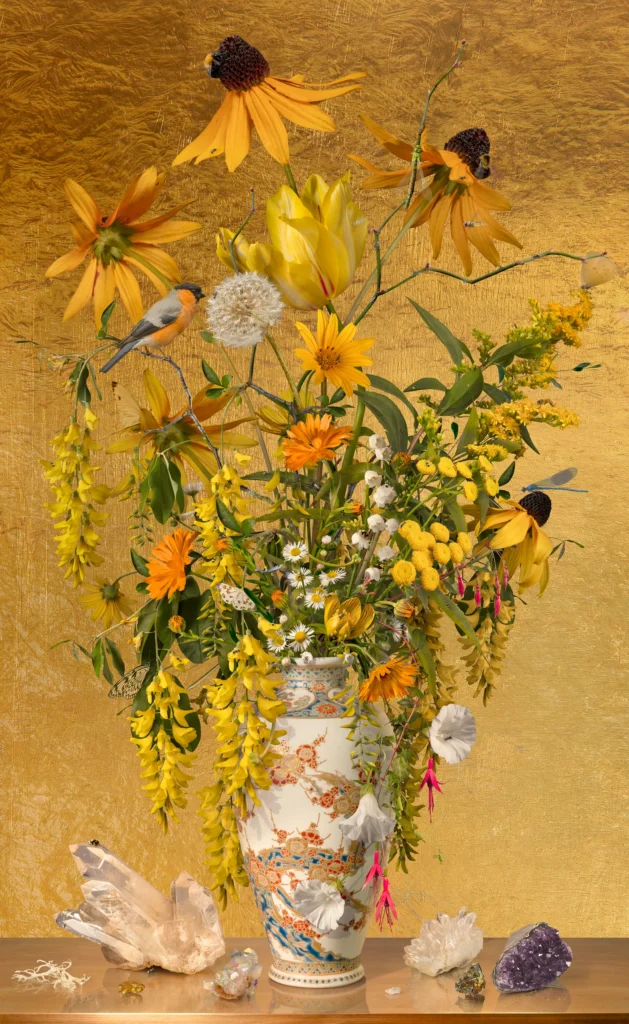
In Gold, Meeuws sets his bouquets against a ground of gold leaf, the way medieval and early Renaissance painters used gold for what lay beyond the visible world. Freed from a room, a ledge or a sky, the flowers and their vases stand in a light that seems to come from behind them, and a single orchid stem in a slender white vase carries as much weight as an overflowing gilded urn. Rock crystal, shells and a stray butterfly complete the still lifes.
Royal Delft
2022 – 2023
For the exhibition Flowers in Blue (Royal Delft Museum, 17 April – 10 September 2023), Royal Delft commissioned Bas Meeuws to create new work around the Delft blue vases in the museum’s collection and to place them where they belong: filled with baroque bouquets, in the tradition of the seventeenth-century flower still life. In the Old Masters’ paintings the vase was usually secondary to the flowers; here the Delftware, from bottle vases to the towering flower pyramids, carries as much weight as the blooms. Inspired by Balthasar van der Ast and the Bosschaert family, reality forms the basis, but Meeuws bends it to his will.
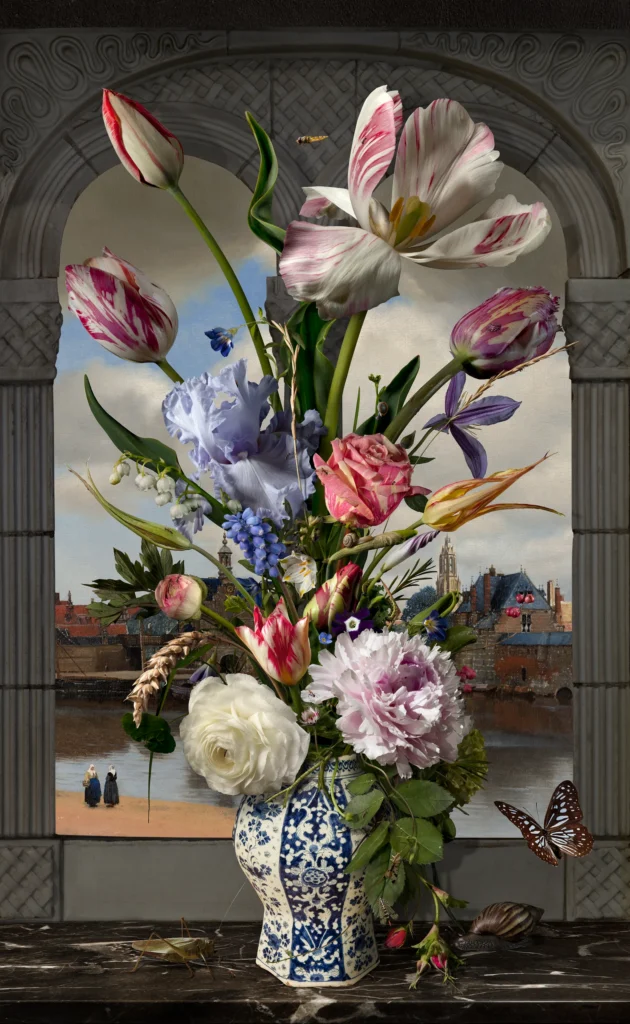
Untitled (#189), 2022
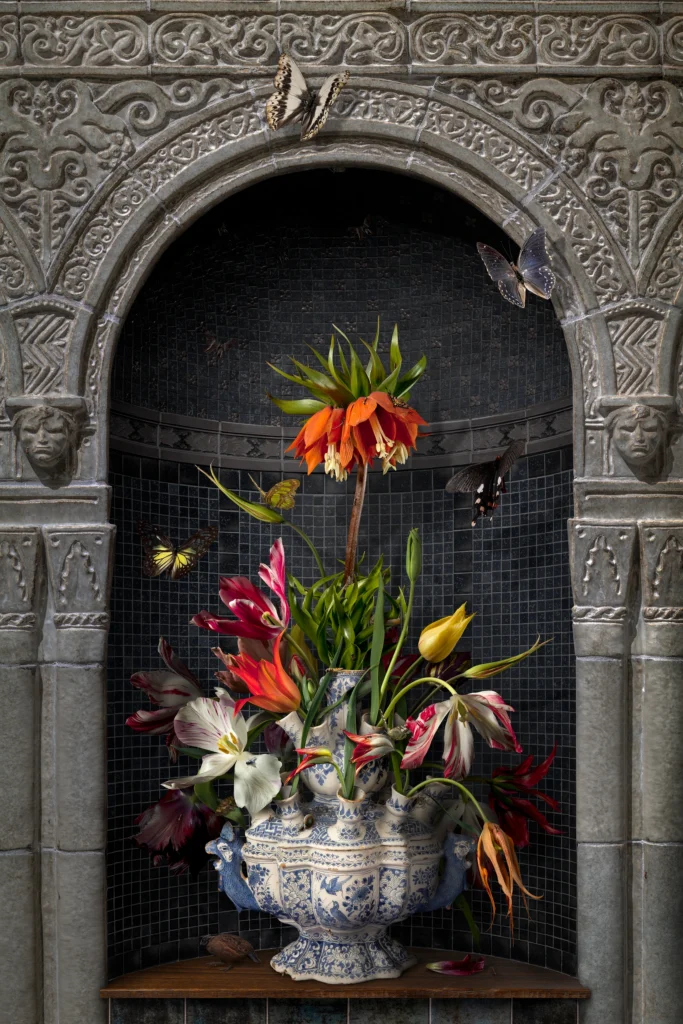
Untitled (#193), 2023
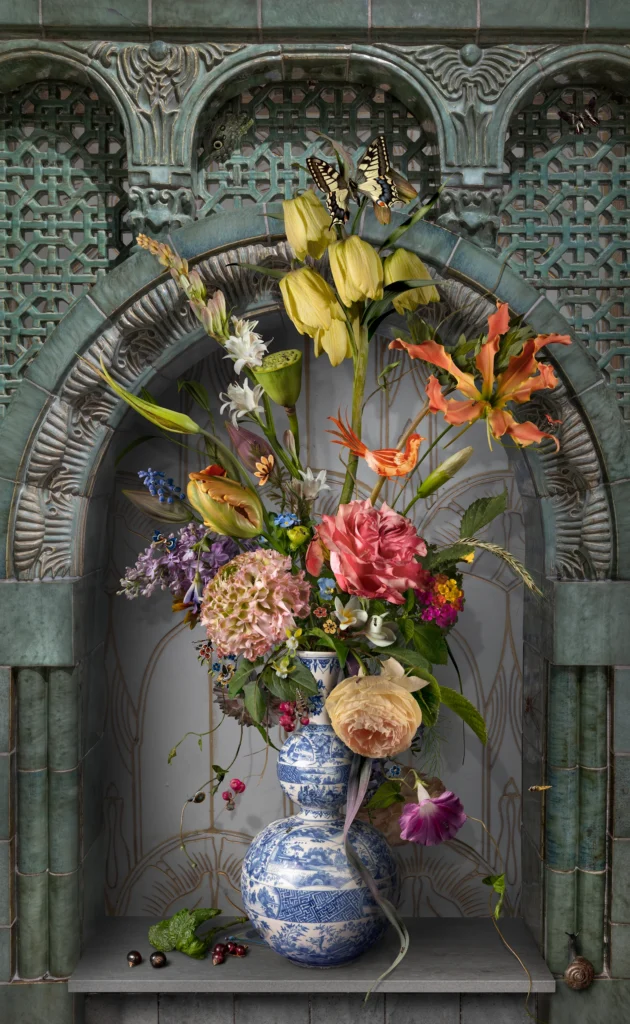
Untitled (#192), 2022
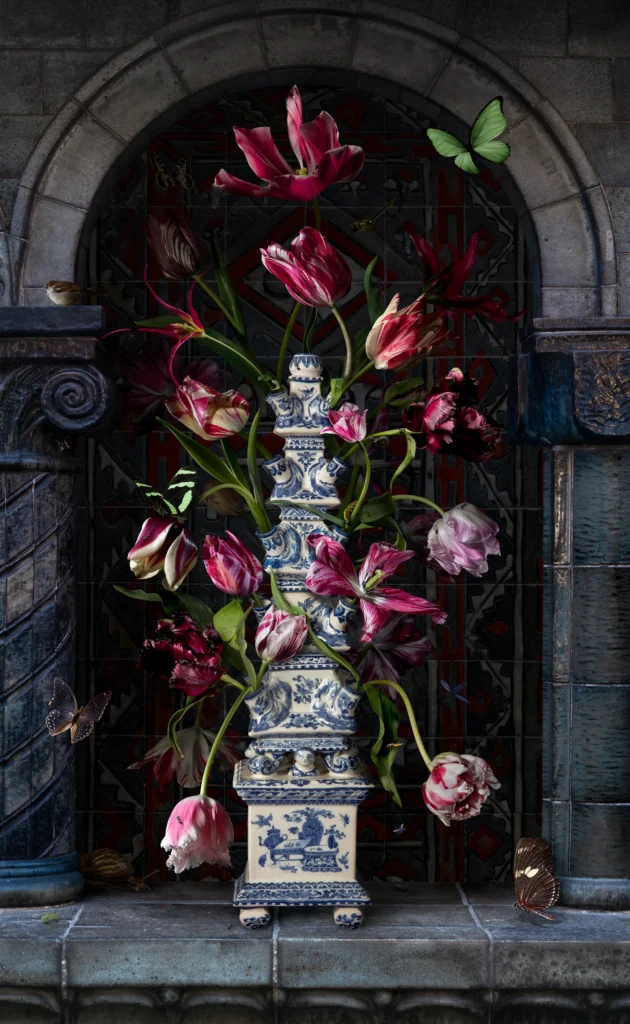
Untitled (#191), 2022
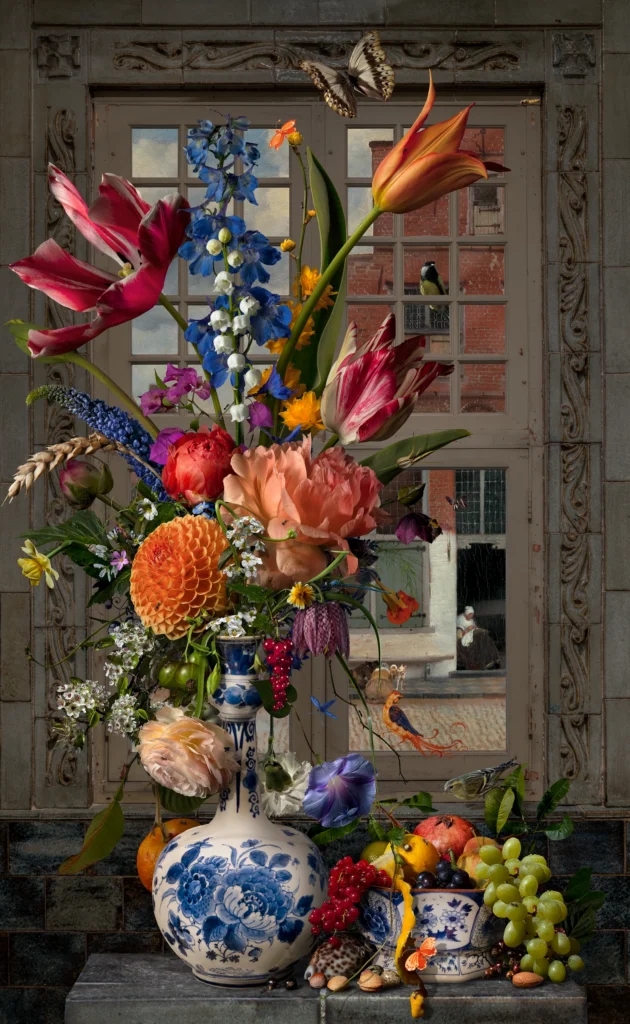
Untitled (#190), 2022
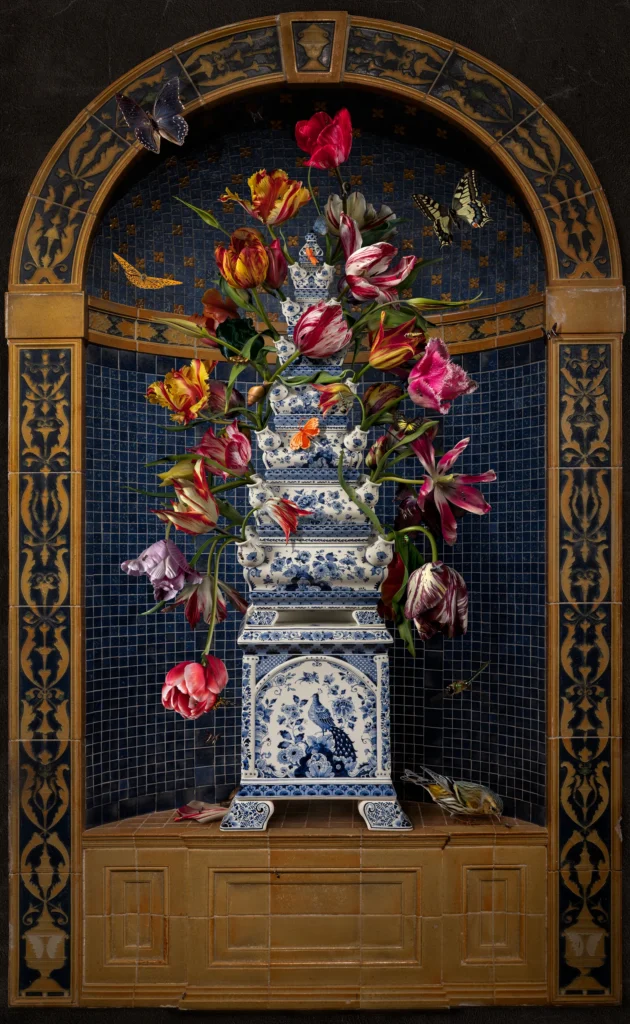
Untitled (#188), 2022
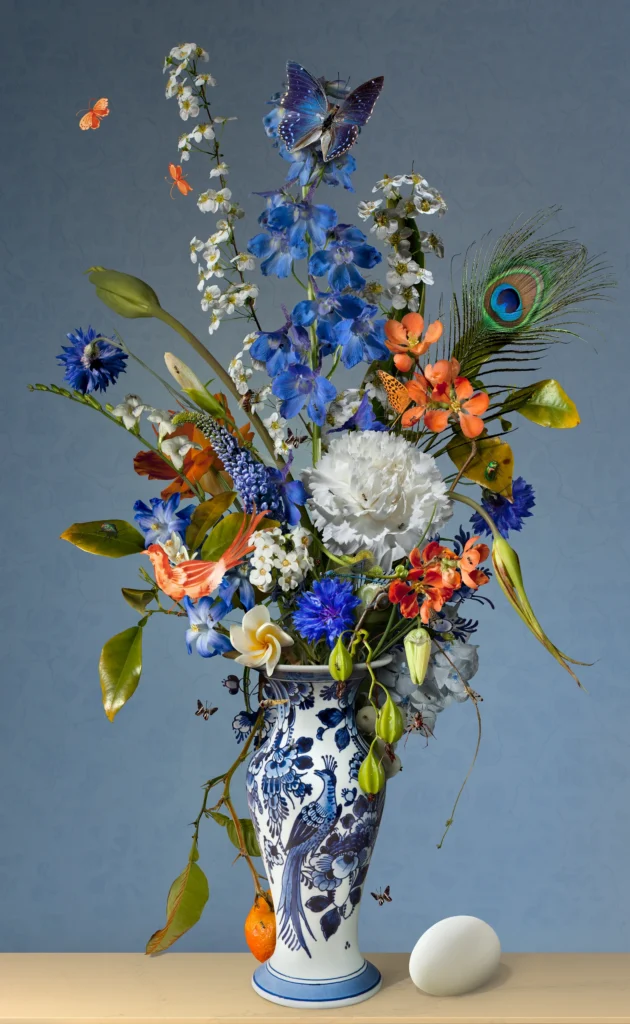
Untitled (#187), 2022
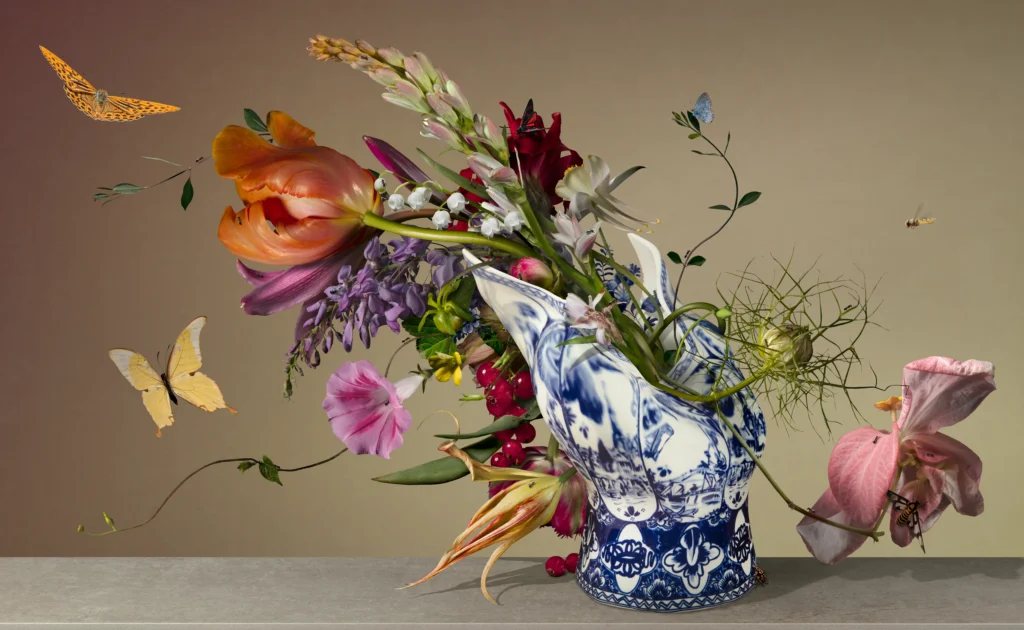
Untitled (#186), 2022
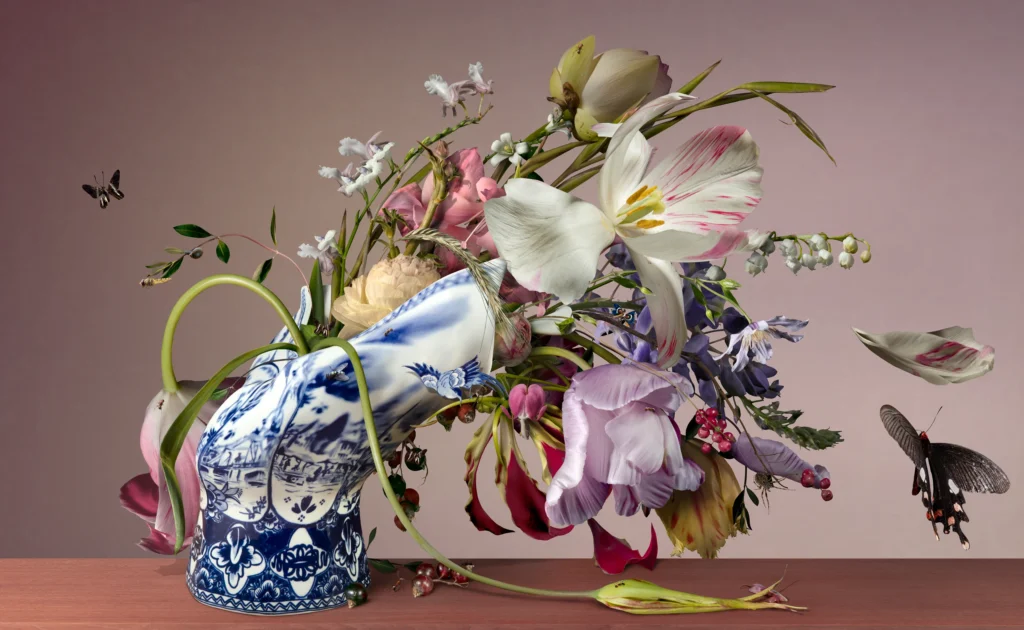
Untitled (#185), 2022
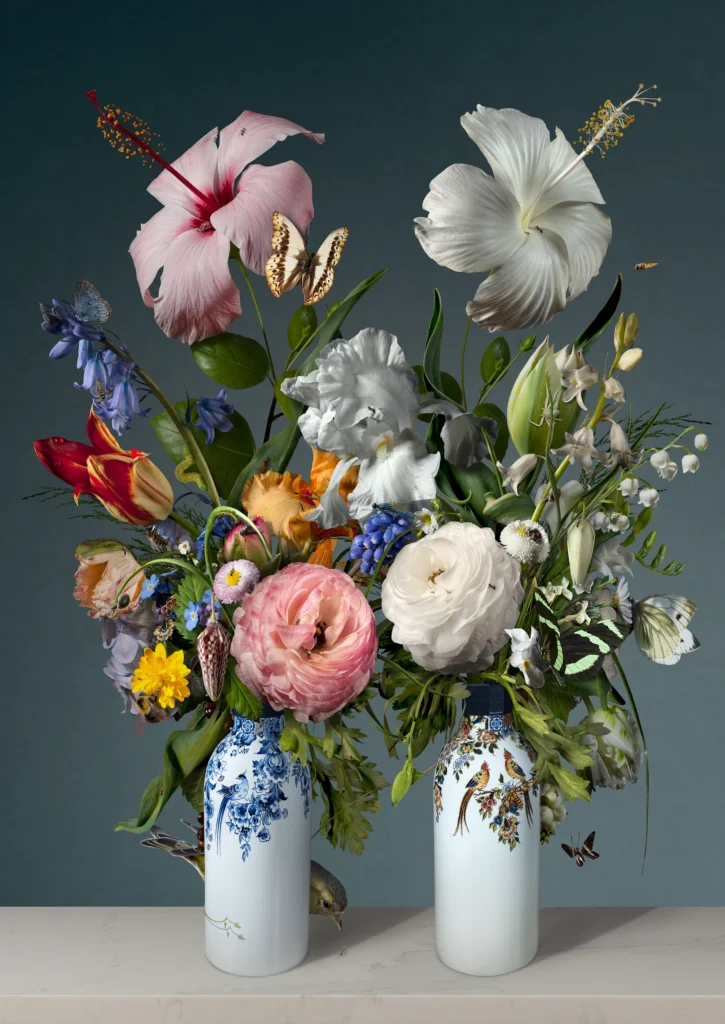
Untitled (#184), 2022
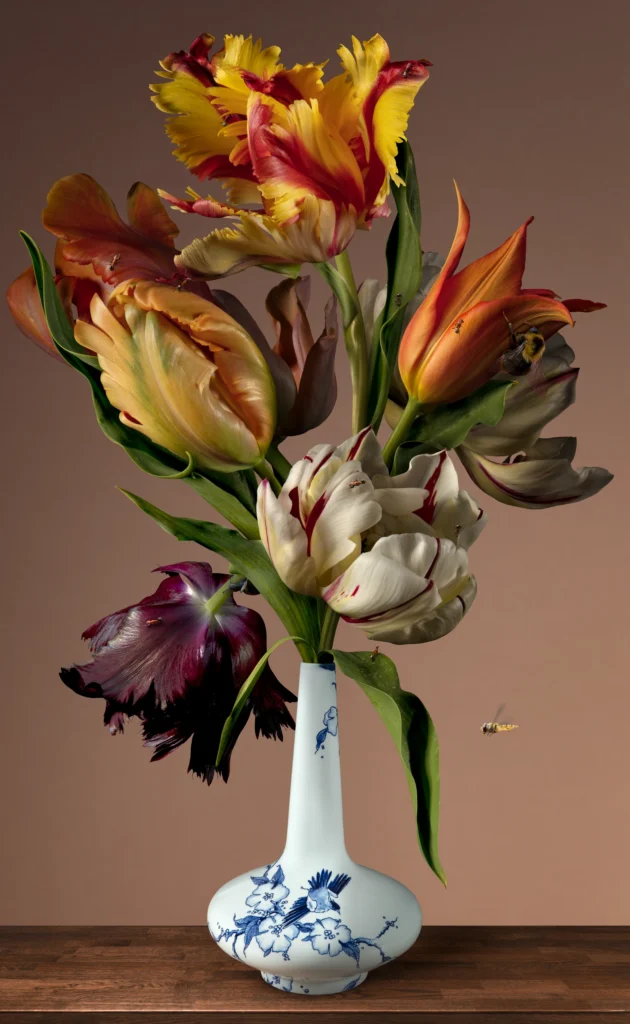
Untitled (#183), 2022
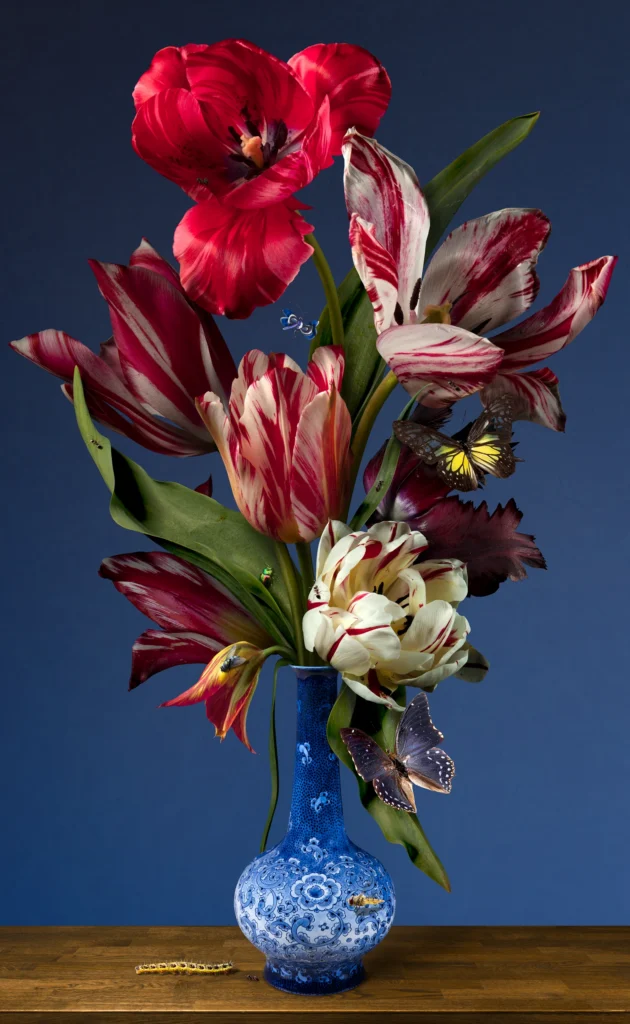
Untitled (#182), 2022
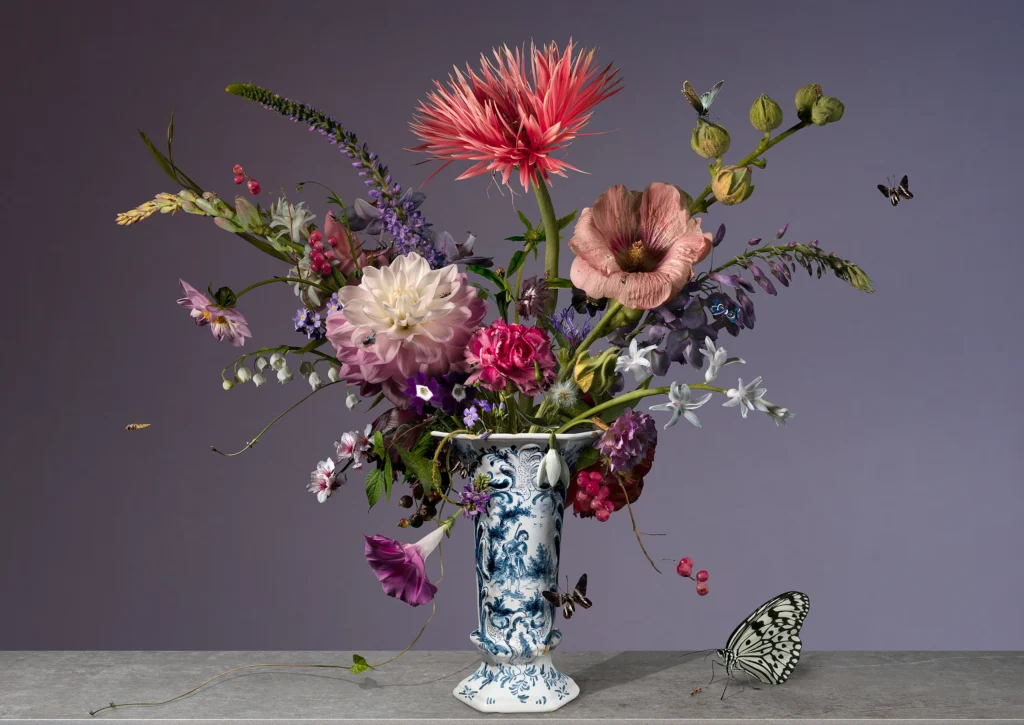
Untitled (#181), 2022
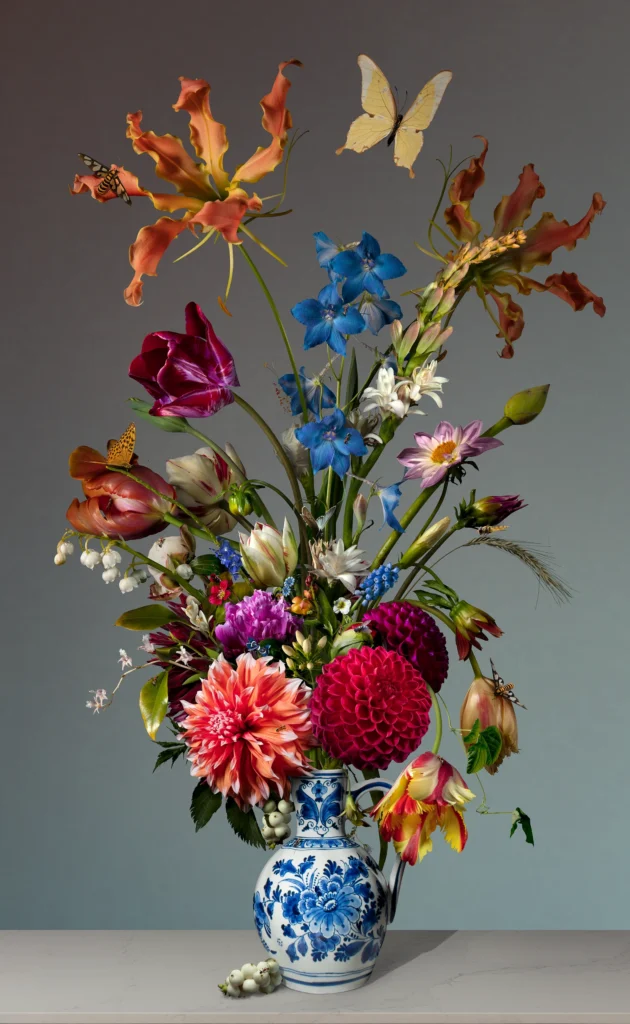
Untitled (#180), 2022
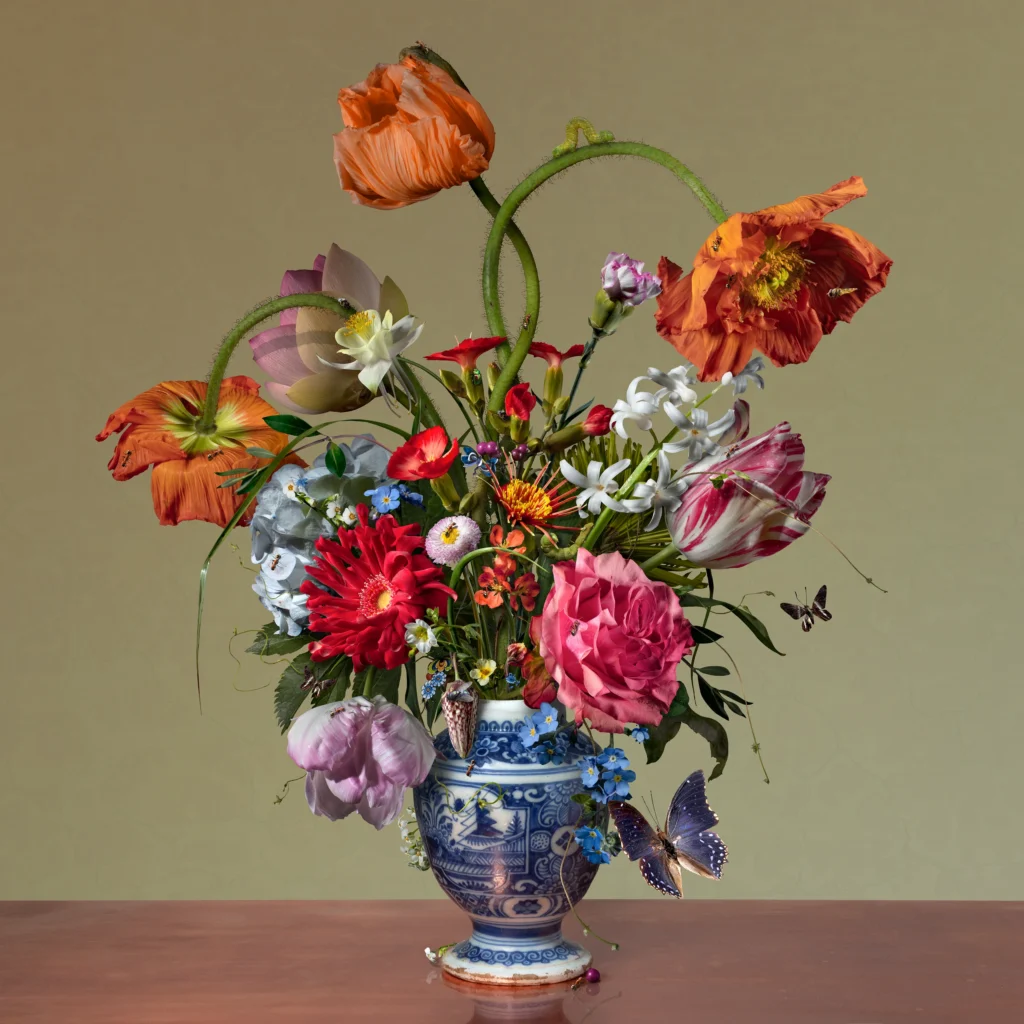
Untitled (#179), 2022
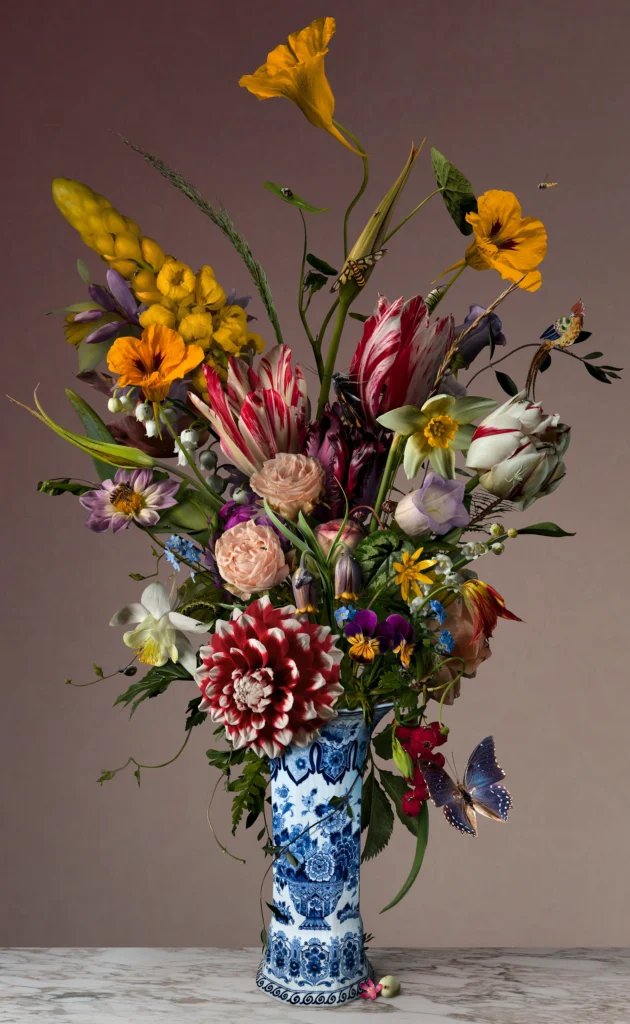
Untitled (#178), 2022
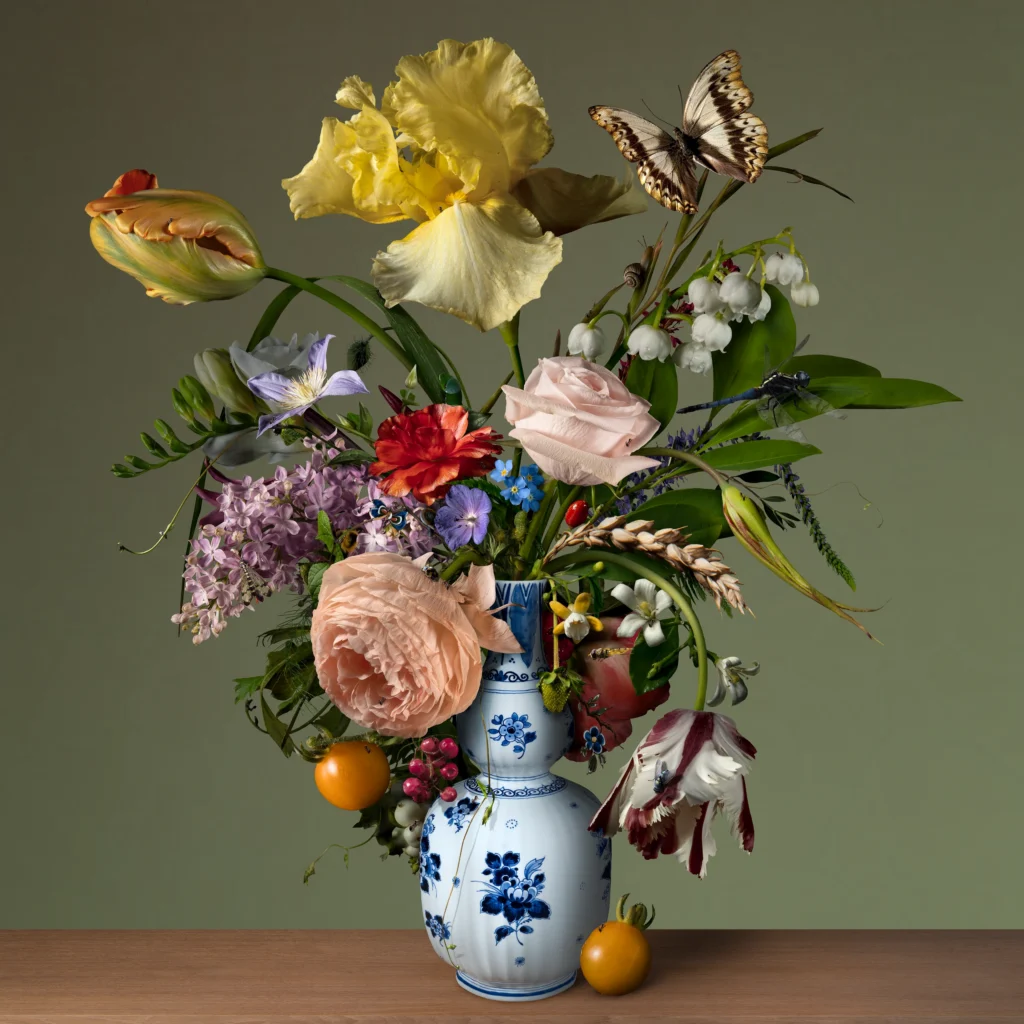
Untitled (#177), 2022
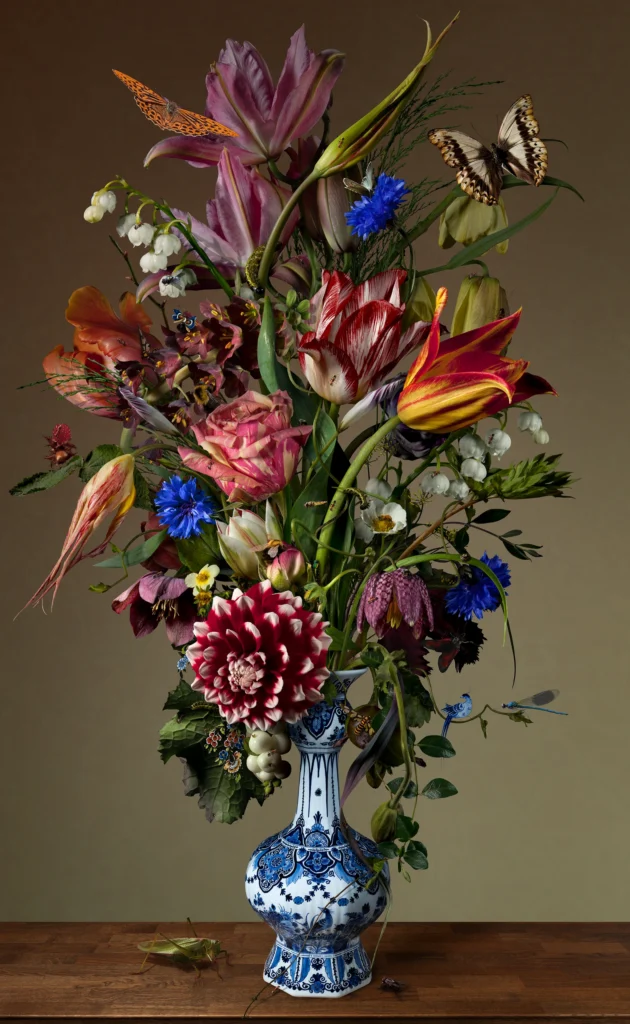
Untitled (#176), 2022
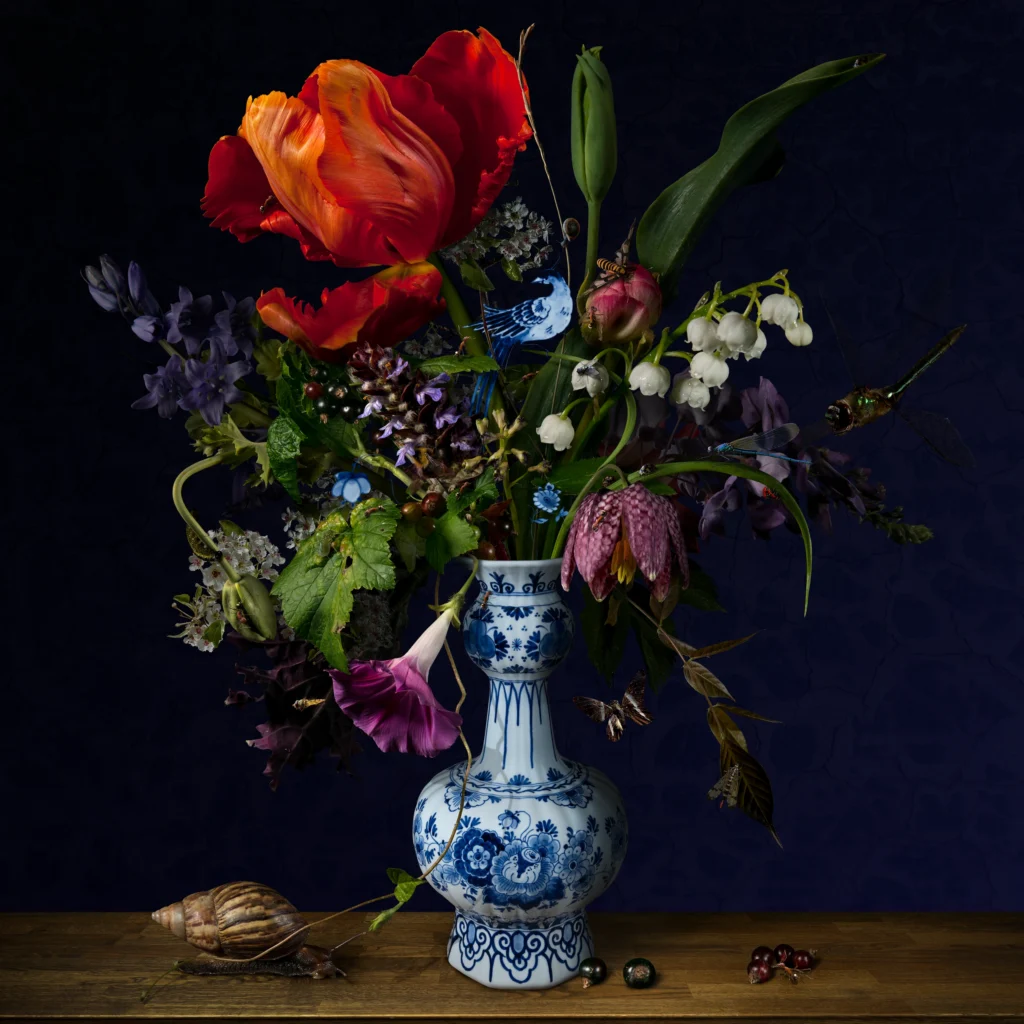
Untitled (#175), 2022
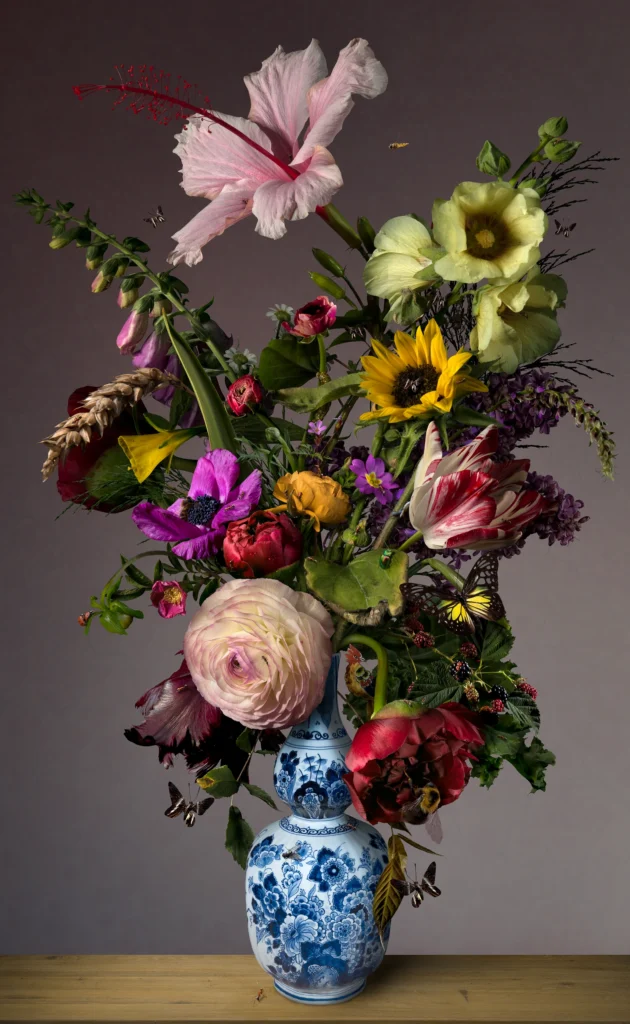
Untitled (#174), 2022
© Bas Meeuws. Courtesy of the artist and Crossover Gallery